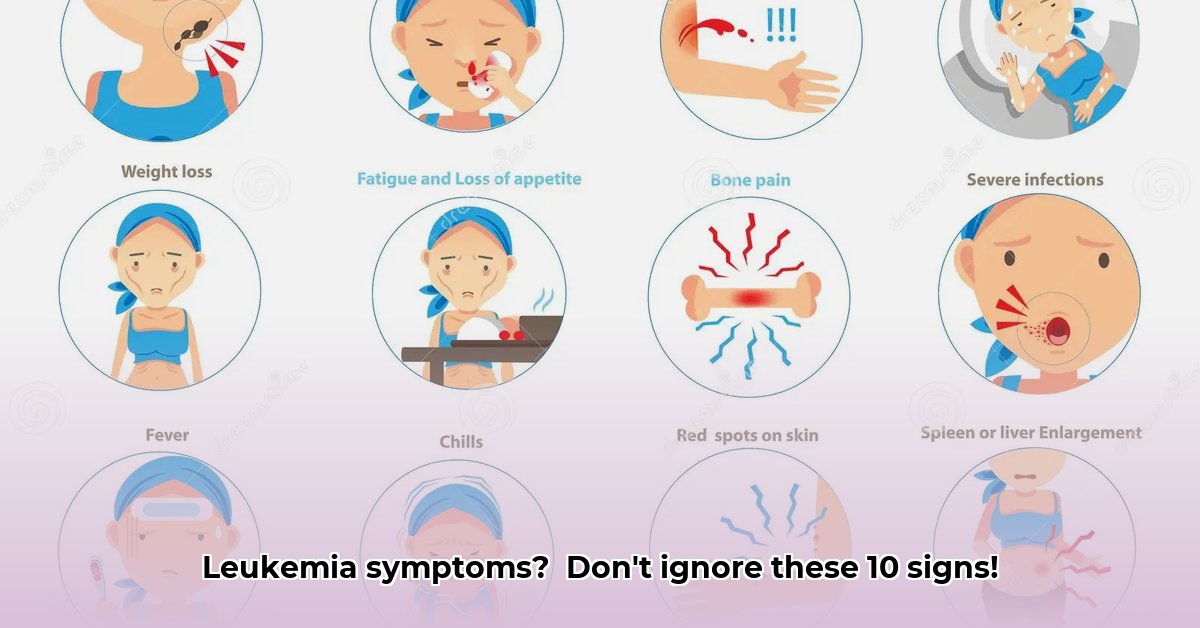
Leukemia, a type of blood cancer, often starts subtly. Early detection is key for better treatment outcomes. Knowing the signs can save lives. This article outlines common and less common symptoms, guiding you on when to seek medical attention.
Common Signs: Your Body's Warning Signals
Many early leukemia symptoms mimic common illnesses. Don't ignore them!
Extreme Fatigue: Feeling completely drained, even after rest? This isn't just tiredness; it's persistent exhaustion affecting daily life. Leukemia disrupts healthy blood cell production, causing profound fatigue.
Weakness and Lethargy: Simple tasks feel incredibly difficult? This isn't laziness – it's a significant weakness impacting your ability to function normally.
Unexpected Weight Loss: Losing weight without dieting or exercise? This could be a metabolic disruption caused by leukemia.
Frequent Infections: Catching colds or flu more than usual? A weakened immune system, a hallmark of leukemia, leaves you vulnerable to infections.
Easy Bleeding and Bruising: Unexplained bruising or bleeding (nosebleeds, bleeding gums)? This points to problems with blood clotting.
Swollen Lymph Nodes: Persistently swollen glands in your neck, armpits, or groin suggest your immune system is fighting something.
Pale Skin (Pallor): Looking paler than usual, particularly in your gums or the whites of your eyes? This can indicate anaemia, a common leukemia complication.
Have you noticed any of these symptoms? While not definitive, they're important warning signs. It's always best to get checked out.
Less Common, Yet Significant Symptoms
Some symptoms are less frequent but still significant. These, along with others, need a professional evaluation.
Skin Discoloration (Petechiae): Tiny purple or red spots appearing on your skin? These could indicate tiny bleeds under your skin.
Bone or Joint Pain: Persistent, unexplained bone or joint pain? Leukemia cells may be infiltrating the bone marrow.
Persistent Headaches: Intense or recurring headaches, especially alongside other symptoms, need medical attention.
Shortness of Breath: Finding it hard to breathe, even during light activity? This could be related to anaemia.
Abdominal Pain or Discomfort: Persistent stomach pain might indicate an enlarged spleen or liver.
Fever: A recurring or persistent fever demands prompt medical help.
Remember, these less common symptoms aren't individually diagnostic, but in combination with other signs, they become more significant.
Symptom Clusters: Recognizing Patterns
Several symptoms together are more indicative than a single isolated sign. For example, persistent fatigue combined with frequent infections and easy bruising is much more concerning than just fatigue alone.
When to See a Doctor: Don't Delay!
Seek immediate medical attention if you experience:
- Severe Bleeding: This requires urgent medical care.
- High Fever: A high fever (above 39°C/102.2°F) suggests a serious infection.
- Persistent Symptoms: Symptoms lasting for weeks or months warrant professional evaluation.
Diagnosis and Treatment: Hope and Action
If leukemia is suspected, blood tests and a bone marrow biopsy will be performed. Early diagnosis significantly improves treatment success rates. Effective treatments are available, offering hope and the opportunity for positive outcomes.
Risk Factors: Understanding Your Chances
While anyone can develop leukemia, certain factors increase your risk. Age and family history are important factors. Exposure to high doses of radiation or specific chemicals can also raise your risk.
Conclusion: Early Detection Saves Lives
Early detection is crucial for successful leukemia treatment. Don't hesitate to seek medical advice if you have concerns. Regular check-ups and open communication with your doctor are paramount.
Reliable Resources: [Link to a reputable organisation like the Leukemia & Lymphoma Society]